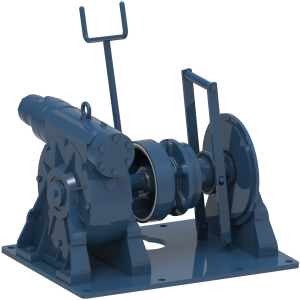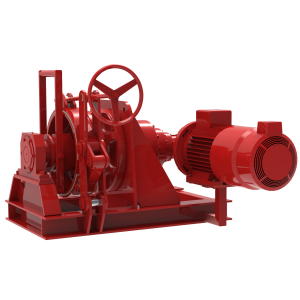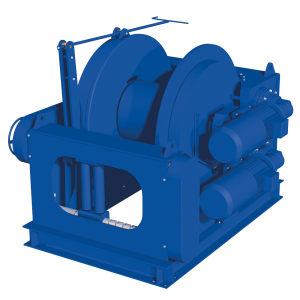
Hydraulic winches on tractors for forestry
In short
- A tractor can drive a hydraulic winch using its power take off, which turns a pump to supply the oil, so the tractor becomes a powerful pulling and skidding machine.
- The winch mounts on the three-point linkage or a frame and is used for forestry work such as skidding logs, and for farm and site recovery, where a strong, mobile pull is needed.
- Hydraulics suit this rough, muddy, mobile work well, and the winch holds the load with a brake and a load holding valve, matched to the tractor and the duty.
A tractor is a mobile source of power that goes where the work is, and on a farm or in forestry that work often includes pulling: skidding felled logs to a track, recovering a stuck machine, or dragging a heavy load across rough ground. A tractor already carries the means to drive a winch, its power take off, so fitting a hydraulic winch turns the tractor into a capable pulling and skidding machine. This pairing of a tractor and a hydraulic winch is common in forestry and on the farm, and it works for the same reasons hydraulics suit other mobile plant, the subject of our note on winches on excavators and plant.
Power from the PTO
A tractor's power take off, or PTO, is a driven shaft provided precisely so the tractor can power attached equipment, and it can drive a hydraulic pump that supplies the winch. The PTO turns the pump, the pump supplies oil under pressure, and the oil drives the winch motor, so the winch is powered by the tractor's engine through the PTO whenever the tractor is running. This uses what the tractor already has, with no separate power source, and it means the winch has real power available, as much as the tractor and the pump can supply, which is what skidding heavy logs and recovery work demand.
Mounting on the tractor
A tractor winch usually mounts on the three-point linkage at the rear, the standard fitting designed to carry attached implements, or on a dedicated frame. This puts the winch where it can pull behind the tractor, with the rope leading out to the load, and lets the winch be fitted and removed as the work needs. Mounted this way the winch travels with the tractor to the work and pulls from a solid base, the tractor's weight and the linkage anchoring the pull. The standard linkage fitting is part of why a tractor winch is straightforward to attach, using the mounting the tractor already provides for implements.
| Feature | On a tractor | Why it fits |
| Power source | PTO drives a pump | Tractor already has the PTO |
| Mounting | Three-point linkage or frame | Standard tractor fitting |
| Typical use | Skidding logs, pulling | Forestry and farm recovery |
| Load holding | Brake and valve | Holds the log safely |
| Toughness | Mud, wet, rough ground | Hydraulics tolerate it |
Skidding logs in forestry
The classic forestry use of a tractor winch is skidding, dragging felled logs from where they lie to a track or landing where they can be loaded. The winch pulls the log to the tractor over rough, often steep ground, and the tractor then moves it on, so the winch reaches logs the tractor cannot drive to directly. This is heavy, dirty, demanding work, with the log snagging, the ground rough and the conditions wet, exactly the kind of duty hydraulics take in their stride. A tractor winch turns the tractor into a skidder, extending its reach into the forest far beyond where its wheels can go.
Farm and site recovery
Beyond forestry, a tractor winch is a valuable recovery and pulling tool on the farm and on site. It recovers stuck machinery and vehicles, drags heavy loads into position, pulls out posts or stumps, and handles the many heavy pulling jobs that come up around a working farm. Because the tractor is already there and mobile, the winch is available wherever the tractor can go, which is most places. This versatility, a strong pull available on a machine that is already on hand and goes everywhere, is much of why a tractor winch earns its place beyond the specific job of skidding logs.
Holding the load safely
A tractor winch must hold its load safely, especially on a slope where a log or a recovered machine could run back. A failsafe brake holds the load when the winch stops, and a load holding valve on the motor controls the pull and holds the load if a hose fails, the same principles as our note on the counterbalance valve describes. On the rough, sloping ground of forestry and farm work this load holding is not optional, because a load that ran back could be dangerous. So a tractor winch is built to hold its load securely in every state, which is part of what makes it safe to use on the demanding ground these jobs involve.
Built for rough, wet work
Forestry and farm work are about as rough as winching gets, with mud, wet, vibration, snagging loads and constant exposure, and the winch must take it. Hydraulics are naturally suited, with a sealed motor that tolerates the wet and dirt and no electrics to keep dry, and a tractor winch is built robustly for the punishment of dragging logs and recovering machines. This toughness matters because the winch works in conditions that would quickly defeat a more delicate machine, and a winch that failed in the middle of a forest or a muddy field would be a real problem, so durability is part of a tractor winch being fit for the work.
Matching the winch to the tractor
Fitting a winch to a tractor is a matching exercise: the winch is sized for the pull the work needs, the pump matched to the PTO speed and the tractor's ability to drive it, and the mounting suited to the tractor's linkage or frame. A winch too large for the tractor will labour the engine and may overload the linkage, while one matched to the tractor pulls well without strain. The honest approach is to consider the tractor and the work together, so the winch and the tractor make a capable, balanced pair, which we are glad to advise on as part of supplying a tractor winch that suits both the machine and the job. It is worth thinking too about the rope and the fairlead, because skidding drags the rope through dirt and over stumps, so a tough rope and a good lead matter as much as the pull itself.
A tractor winch with us
We supply hydraulic winches for tractors, driven by the PTO and mounted on the linkage or a frame, for forestry skidding and farm recovery. See the range in our winch catalogue, read our overview of hydraulic winches and how the load holding valve keeps the load safe. Tell us the tractor, the PTO and the work, and we will specify a winch matched to the tractor that pulls strongly and holds the load safely on rough ground.
Frequently asked questions
How is a tractor winch powered?
By the tractor's power take off, or PTO, a driven shaft that turns a hydraulic pump supplying oil to the winch motor. So the winch is powered by the tractor's engine through the PTO whenever the tractor is running, using what the tractor already has with no separate power source.
How does a tractor winch mount?
Usually on the three-point linkage at the rear, the standard fitting for attached implements, or on a dedicated frame. This puts the winch where it can pull behind the tractor from a solid base, with the tractor's weight and the linkage anchoring the pull, and lets it be fitted and removed as the work needs.
What is a tractor winch used for in forestry?
Mainly skidding, dragging felled logs from where they lie to a track or landing for loading. The winch pulls the log to the tractor over rough or steep ground the tractor cannot drive to, turning the tractor into a skidder. It is also used for recovery and heavy pulling on the farm and on site.
How does a tractor winch hold the load on a slope?
With a failsafe brake that holds the load when the winch stops and a load holding valve on the motor that controls the pull and holds the load if a hose fails. On the sloping, rough ground of forestry and farm work this load holding is essential, because a load that ran back could be dangerous.